Rollback Safety: a proposed benchmark axis for AI app builders (July 2026)
A neutral BuilderProof proposal to score AI app builders on Rollback Safety across five documented sub-criteria. The finding: code version history is now table stakes, but data-layer rollback is the sub-criterion almost none of them document.
On this page
Quick answer
Every mainstream AI app builder we track ships some form of "go back to a working version," but they are not equal, and the differences only surface at the worst possible moment: right after the model has broken your app. This is a proposal to add Rollback Safety as a first-class axis in the BuilderProof benchmark (July 2026). We break it into five documented sub-criteria and map the current cohort against them. The headline finding is neutral and specific: no builder in the cohort satisfies all five today, and the sub-criterion almost none of them document is data-layer rollback. Code history is now table stakes; recovering your database after a bad change is not.
This is a draft axis, open for community revision. Scores here reflect what each vendor documents as of July 2026, not our opinion of quality.
Why rollback deserves its own axis
BuilderProof already scores builders on code-portability-v2-axis-proposal-june-2026 and data-layer-portability-axis-proposal-july-2026. Those axes ask "can you leave?" Rollback Safety asks a different, more frequent question: "when the agent regresses your working app, how cleanly can you get back to the last good state, without losing everything you did after it?"
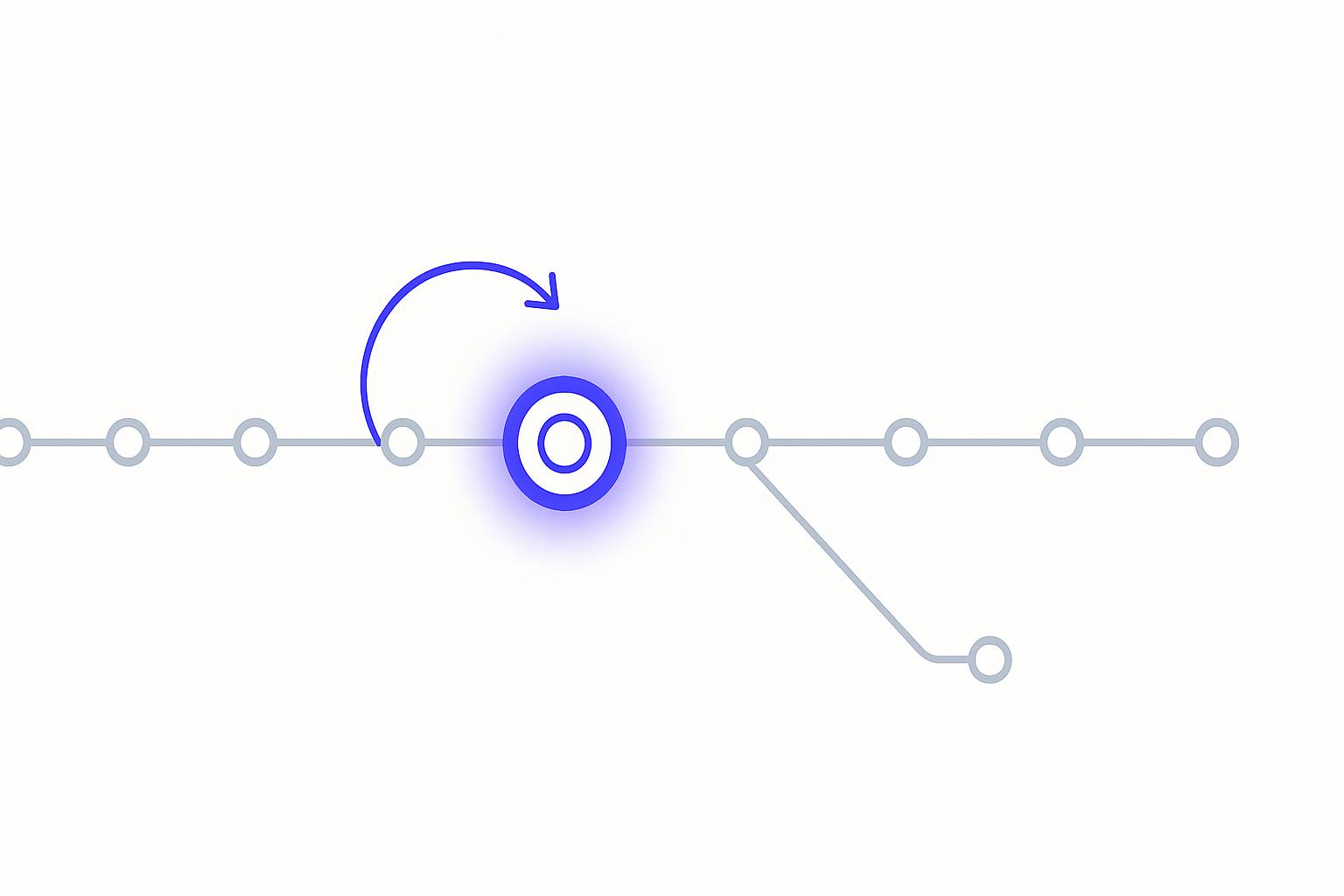
It deserves separation because the failure mode is specific to iterative AI building. A human developer commits deliberately. An AI builder rewrites files on almost every prompt, so the "commit" cadence is out of the user's hands. That makes the quality of the automatic history, not just its existence, the thing that matters. A history that silently discards forward versions when you restore is very different from one that treats a restore as a new, non-destructive commit.
We priced this axis against five platforms we could source primary documentation for: 




The proposed axis: five sub-criteria
We score Rollback Safety as five independent yes/partial/not-documented checks. A builder does not need all five to be useful; the point is to make the tradeoffs legible.
- Automatic checkpoints. History is captured on every change without the user having to remember to save. This is the baseline safety net for AI iteration.
- Non-destructive history. Restoring an older version does not delete the versions created after it. Restore is additive (a new version on top), not a truncation.
- Named / bookmarked good states. You can label a version you trust ("checkout works") so you can find it again after fifty more prompts.
- Data-layer rollback. History covers the database and its contents/schema, not only the generated code and files. This is the axis nobody wants to test in production.
- Independent recovery path. A safety net that lives outside the builder itself, typically a two-way GitHub sync or a code export, so a single account or platform issue cannot strand you.
How the current cohort documents rollback today
The matrix below reflects each vendor's own published docs and changelogs as of July 2026. "Not documented" means we could not find a primary source for it, not that it is impossible. Corrections via /contribute are welcome.
Scroll to see more
| Builder | Auto checkpoints | Non-destructive | Named states | Data-layer rollback | Independent path |
|---|---|---|---|---|---|
| Lovable | Documented | Documented | Documented (bookmarks) | Not documented | Documented (GitHub sync) |
| Bolt.new | Documented | Documented | Documented (labels) | Not documented | Documented (GitHub) |
| Replit | Documented | Partial | Partial | Not documented | Documented (Git/export) |
| v0 | Documented | Documented | Partial | Not documented | Documented (Git integration) |
| Base44 | Documented | Documented | Partial | Documented | Documented (GitHub export) |
Reading the matrix
Lovable documents an automatic, browsable version history and, since its Versioning 2.0 update, bookmarks plus an improved history view for restoring earlier app states (Lovable, Versioning 2.0, March 2025; Lovable docs, project history, 2026). Its documented gap is a dedicated data rollback layer.
Bolt.new keeps automatic version history and lets you browse, preview, label, and restore older versions (Bolt Help Center, backups and version history, 2026; Bolt Help Center, version history and GitHub, 2026). Bolt is explicit that restore operates on project versions; connected database migrations sit outside that scope, which is exactly the data-layer gap this axis is meant to expose.
Replit Agent "creates checkpoints as it works, so you can roll back to any previous state" (Replit docs, Agent, 2026). We scored non-destructive behavior and named states as partial because the public docs describe the checkpoint concept without fully specifying retention or labeling, and Git/export provides the independent path.
v0 documents the cleanest history model on paper: "Restoring an old version creates a new, most recent version using the restored code to maintain a linear version history" (v0 docs, versions, 2026). That is a textbook non-destructive design. Named states are partial (versions are numbered, not user-labeled), and data rollback is not documented.
Base44 is the one cohort member that documents rollback at both layers. Its versioning update lets you "view, load, and revert to any version of your project, past or future" (Base44 changelog, improved versioning, June 2025), and separately it documents a data version history that "saves your current data as a backup version before a restore" (Base44 docs, data version history, 2026). On this axis, that is the differentiator, and it is why the axis is worth scoring.
The gap the axis exposes: code rollback is not data rollback
The most useful thing this axis surfaces is a category error users make constantly. "I rolled back" almost always means "I restored the code." Four of the five builders here document version history for the generated code and files. Only one documents a separate, explicit rollback for the data.
That matters because the two diverge exactly when it hurts. If a prompt drops a column or rewrites a schema and you then restore the code to before that prompt, the code expects the old shape while the database is already in the new one. Restoring code does not un-run a migration or bring back deleted rows. A benchmark that only checks "does it have version history?" scores all five identically and hides the single biggest recovery risk in AI-built apps. Rollback Safety, scored across the five sub-criteria, does not.
Scoring rubric (draft v0.1)
For the community scorecard we propose the simplest defensible scheme:
- Each sub-criterion is scored Documented (1), Partial (0.5), or Not documented (0), with a required primary-source link for any non-zero score.
- The axis score is the sum, 0 to 5, reported as a vector as well as a total so a builder strong on code history but silent on data is never indistinguishable from one strong on both.
- No qualitative "better/worse" verdict is attached by the editorial team. Evidence lands where it lands, and a "Not documented" is an invitation for the vendor or the community to submit a source, not a judgment.
Consistent with the how-we-benchmark-ai-app-builders-methodology-v1 principles, every cell must cite a primary vendor source and is versioned, so the matrix can be corrected in the open.
Open questions for contributors
- Should "independent recovery path" weight two-way sync (changes flow both directions) above one-way export? We currently treat both as Documented.
- Should retention limits (how far back history goes, and on which plan) be a sixth sub-criterion rather than folded into "automatic checkpoints"?
- For data-layer rollback, is a manual pre-change backup the user triggers equivalent to an automatic one? We lean toward scoring automatic higher, but this is open.
If you maintain one of these products or have tested a documented behavior that contradicts the matrix, propose an edit via /contribute. This axis ships to the live scorecard only after community review.
Written by
BuilderProof editorial teamThe BuilderProof editorial team maintains the community-editable benchmark of AI app builders. We publish methodology proposals openly and score builders on documented behavior, not opinion.
Cite this benchmark
BuilderProof editorial team. "Rollback Safety: a proposed benchmark axis for AI app builders (July 2026)". BuilderProof, July 2026. https://www.builderproof.org/benchmarks/rollback-safety-axis-proposal-july-2026.
@misc{builderproof-rollback-safety-axis-proposal-july-2026,
  title  = {{Rollback Safety: a proposed benchmark axis for AI app builders (July 2026)}},
  author = {{BuilderProof editorial team}},
  year   = {2026},
  month  = {jul},
  howpublished = {\url{https://www.builderproof.org/benchmarks/rollback-safety-axis-proposal-july-2026}},
  note   = {BuilderProof, builderproof.org}
}
Frequently asked questions
What is rollback safety in an AI app builder?
It is how cleanly you can return to a known-good version of your app after the AI regresses it, without losing the work you did afterward. We score it across five documented sub-criteria: automatic checkpoints, non-destructive history, named good states, data-layer rollback, and an independent recovery path such as GitHub sync.
Do AI app builders roll back the database too, or just the code?
Mostly just the code. As of July 2026, four of the five builders we sourced (Lovable, Bolt.new, Replit, v0) document version history for generated code and files but not for the database. Base44 is the exception, documenting a separate data version history that backs up current data before a restore. Restoring code does not un-run a schema migration or bring back deleted rows, which is why we score data-layer rollback as its own sub-criterion.
Does restoring an old version delete my newer versions?
It depends on the builder. v0 documents a linear, non-destructive model where restoring an old version creates a new most-recent version. Lovable, Bolt.new and Base44 also document additive restore. Others are less explicit in their public docs, so we score non-destructive behavior per documented evidence and mark the rest partial.
How can I recover a version if the builder itself is unavailable?
Use an independent recovery path. Every builder in the cohort documents either a two-way GitHub sync or a code export, so a working state can live outside the platform. We treat that as the fifth sub-criterion because a safety net inside the same account is not a true safety net.
Related benchmarks
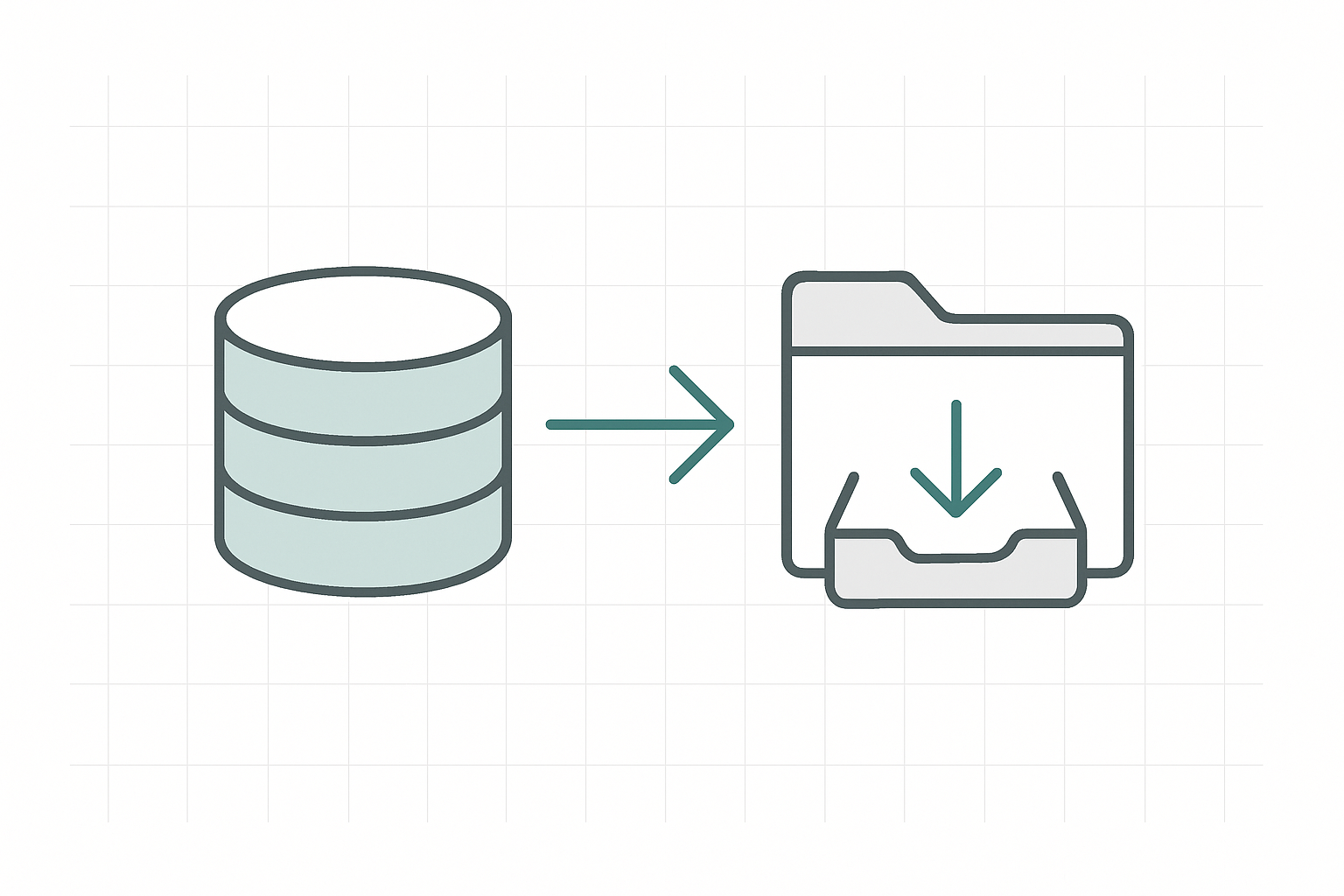
Data-Layer Portability: A Proposed BuilderProof Axis for Whether You Can Take Your Database With You (July 2026)
Benchmarks measure whether you can leave an AI app builder with your code. Almost none measure whether you can leave with your data. A proposed sixth-family BuilderProof axis with a five-check rubric and preliminary, docs-based reads of five builders.
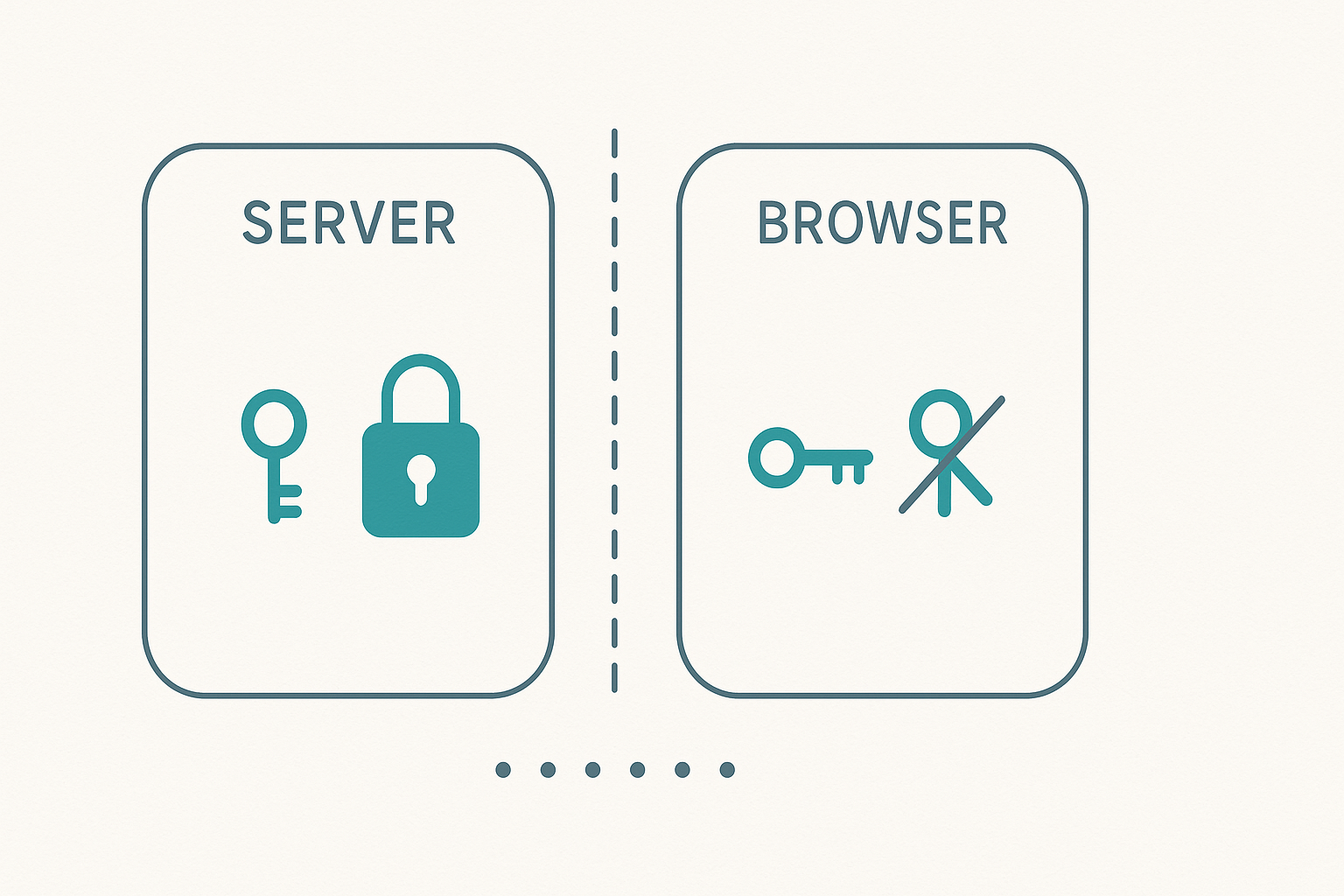
Secrets-Handling Posture: A Proposed AI Builder Benchmark Axis
Code and data lock-in get benchmark axes; how a builder handles your API keys does not. A proposed BuilderProof axis with a reproducible five-check rubric and a preliminary July 2026 docs read across five AI app builders.

How We Benchmark AI App Builders: The BuilderProof Methodology v1
BuilderProof methodology v1.1: the published rubric, brief OQ-7, environment standards and weights used to score AI app builders on output quality, speed, deploy quality and agency suitability. The four June 2026 result sets were withdrawn on August 21, 2026 as placeholder data, so the lab currently publishes method, not scores.