AI App Builder Code Ownership, Benchmarked (2026): The Portability Leaderboard
A documentation-sourced, single-axis leaderboard scoring how easily you can export and own the code from five AI app builders. v0 and Bolt lead at 8, Lovable and Replit at 7, Base44 at 4.
Updated on September 1, 2026
On this page
Quick Answer (July 2026)
As of July 2026, the five mainstream prompt-to-app builders split cleanly on how easily you can take your code and leave. On BuilderProof's 0 to 10 code-ownership-and-portability axis, v0 and Bolt lead at 8, Lovable and Replit sit at 7, and Base44 trails at 4. The gap is not about whether you can download files. Almost every tool now offers a ZIP export or a GitHub push. The gap is about what happens next: whether the exported project builds and runs on your own machine and infrastructure without signing back into the vendor. That single test, runtime independence, is where the scores separate. Every number below is sourced from vendor documentation, and the two published axis values (Replit 7, Base44 4) match the head-to-heads we scored earlier this month.
The portability leaderboard
Scored 0 to 10 against BuilderProof's published rubric. Method and axis definitions live in our benchmark methodology.
Scroll to see more
| Rank | Builder | Ownership and portability | One-line read |
|---|---|---|---|
| 1 |  v0 v0 | 8 / 10 | Standard Next.js output, git workflows, runs anywhere Node runs |
| 1 |  Bolt Bolt | 8 / 10 | One-click ZIP export plus GitHub, clean standard project |
| 3 |  Lovable Lovable | 7 / 10 | Strongest written no-lock-in stance, backend leans on Supabase |
| 3 |  Replit Replit | 7 / 10 | Full code via Git, but platform config needs rewiring off-platform |
| 5 |  Base44 Base44 | 4 / 10 | Export exists, but the exported app still leans on Base44 to run |
Two of the five rows tie. That is honest: the top four tools are all genuinely exportable, and the practical differences between them are about backend coupling, not about whether the code leaves. Base44 is the one clear outlier, and the reason is structural rather than a matter of a missing button.
How we score portability
The axis is not a yes-or-no "can you export" flag. Each tool is scored on four sub-criteria, then rolled into a single 0 to 10 number:
- Export mechanism. Is there a one-click ZIP download, native two-way GitHub sync, or both?
- Output cleanliness. Is the generated code a standard framework project a developer would recognize, or proprietary scaffolding?
- Runtime independence. Does the exported project build and run on your own infrastructure without the vendor's hosted backend, SDK, or a login?
- Ownership and license terms. Who owns the generated code, and under what license?
Criterion 3 is the one that moves scores. A tool can score full marks on export and cleanliness and still lose points if the code it hands you cannot stand on its own.
The rows, with evidence
What a high portability score does and does not buy you
Portability is an insurance axis, not a quality axis. A tool can rank last here and still be the right pick: Base44's tight backend coupling is the same integration that makes it fast to ship an internal tool without wiring auth and a database yourself. The trade is real in both directions. High portability lowers your switching cost and your bus-factor risk. Low portability often buys speed and a batteries-included backend today.
The practical takeaway from this axis is narrow and specific. If your project has any chance of outgrowing the builder, or if a developer will eventually need to own the codebase, weight runtime independence heavily and treat the export button as necessary but not sufficient. Download a project early and try to run it on a clean machine before you commit. That five-minute test tells you more than any marketing page. The community signal backs this up: threads about moving off a builder are now common enough that "can I leave" is a mainstream buying question, not an edge case (r/nocode, Anyone here move off Lovable or Bolt, 2025).
For the security-and-access side of the same portfolio, see our companion single-axis ranking, the ai-app-builder-security-2026-auth-posture-leaderboard. Portability and auth posture are the two axes buyers most often discover too late.
One limit of this axis is worth stating plainly, because it is the most common way a high score misleads a buyer. An export that hands over every source file can still leave an application that will not start once the vendor's runtime, managed database or hosted auth service is taken away. That is a different measurement from whether the code leaves, and we have proposed it as a separate axis rather than folding it into this score, in the runtime-lock-in-self-host-depth-axis-proposal-august-2026 (August 2026). If self-hosting is a hard requirement, read the two together: this leaderboard tells you whether the code can leave, the proposed axis asks whether the running application can.
Methodology note
This is a documentation-sourced leaderboard, not a single-prompt vibe check. Scores reuse BuilderProof's standing code-portability axis, so the Replit and Base44 values match the per-axis numbers we published in our head-to-heads this month. Where a vendor's own docs contradict a third-party summary, the vendor docs win. Community reports are cited as signal, not as scores. Corrections are welcome: the rubric and the scores are meant to be challenged and revised as the tools change.
Written by
BuilderProof editorial teamThe BuilderProof editorial team maintains community-editable, documentation-sourced benchmarks of AI app builders. Scores are reproducible, vendor-neutral, and open to correction.
Cite this benchmark
BuilderProof editorial team. "AI App Builder Code Ownership, Benchmarked (2026): The Portability Leaderboard". BuilderProof, July 2026. https://www.builderproof.org/benchmarks/ai-app-builder-code-ownership-2026-portability-leaderboard.
@misc{builderproof-ai-app-builder-code-ownership-2026-portability-leaderboard,
  title  = {{AI App Builder Code Ownership, Benchmarked (2026): The Portability Leaderboard}},
  author = {{BuilderProof editorial team}},
  year   = {2026},
  month  = {jul},
  howpublished = {\url{https://www.builderproof.org/benchmarks/ai-app-builder-code-ownership-2026-portability-leaderboard}},
  note   = {BuilderProof, builderproof.org}
}
Download the underlying data
The full six-axis score dataset behind these leaderboards, reproducible and CC BY 4.0.
Embed this leaderboard
<iframe src="https://www.builderproof.org/embed/ai-app-builder-code-ownership-2026-portability-leaderboard" width="100%" height="200" style="border:1px solid #e5e7eb;border-radius:12px;" loading="lazy" title="AI App Builder Code Ownership, Benchmarked (2026): The Portability Leaderboard"></iframe>
<p>Source: <a href="https://www.builderproof.org/benchmarks/ai-app-builder-code-ownership-2026-portability-leaderboard">BuilderProof</a></p>
Frequently asked questions
Can you export your code from AI app builders like Lovable, Bolt, and Replit?
Yes. As of 2026, Lovable, Bolt, Replit, and v0 all provide code export through a ZIP download, native GitHub sync, or both, and their documentation describes the process. Base44 also offers GitHub and ZIP export, but its exported apps depend on the Base44 backend to run, so the export is less standalone than the others.
Which AI app builder is hardest to migrate away from?
On BuilderProof's portability axis, Base44 scores lowest at 4 out of 10. The export mechanism exists, but the generated app is built against the Base44 SDK and backend for auth and data, so the downloaded project typically still expects a Base44 sign-in to run rather than working as a clean standalone codebase.
Does exported AI-generated code run without the original platform?
It depends on the tool. v0 and Bolt produce standard React or Next.js projects that build and run anywhere Node runs, so they score highest. Lovable and Replit hand you the full code but couple it to a hosted backend (Supabase) or platform-specific config, which needs rewiring. Base44's exported app leans on its own backend, which is the main portability limitation.
Who owns the code an AI app builder generates?
In every tool on this leaderboard, you own the generated code. Replit additionally MIT-licenses public Repls while private projects stay under your control. Ownership of the code is not the same as portability of the running app: you can own code that still depends on a vendor's hosted services to function.
Related benchmarks

AI App Builder Security, Benchmarked (2026): The Auth-Posture Leaderboard
A neutral, reproducible leaderboard ranking five AI app builders on BuilderProof auth and access-control posture axis, scored from public 2026 documentation. Bolt and Replit lead at 8/10, Base44 trails at 5/10, with the July 2025 Wiz disclosure weighed as documented evidence.
Base44 vs Replit (2026): Six-Axis Benchmark
BuilderProof has withdrawn the six-axis totals for this pairing, and two of the five surviving axes tie. A reproducible, documentation-sourced scorecard of the closed no-code generator versus the open cloud IDE.
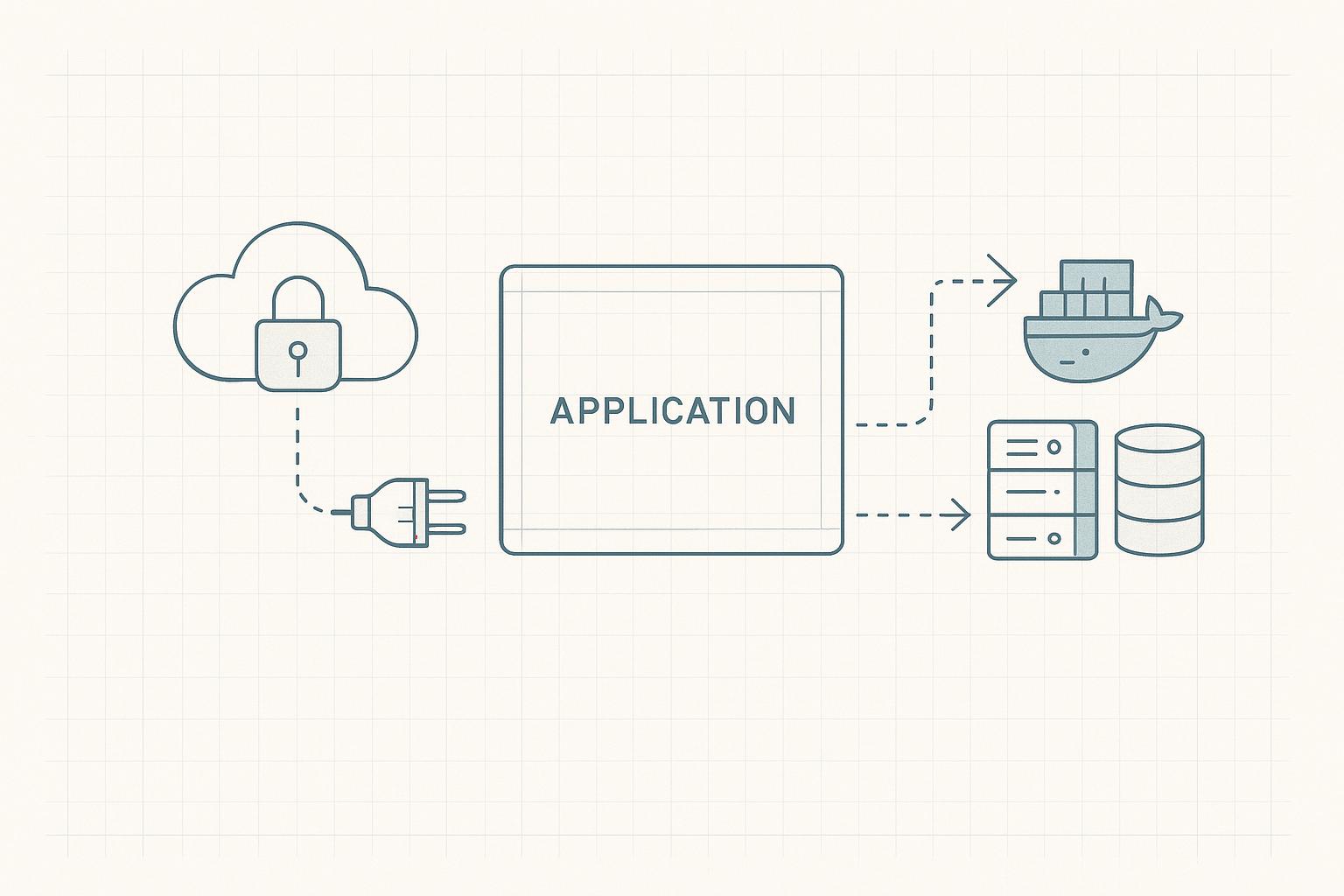
Runtime Lock-In and Self-Host Depth: A Proposed Axis for Whether AI-Builder Apps Actually Run Off-Platform (August 2026)
A proposed BuilderProof benchmark axis measuring whether the code an AI app builder emits can actually build, run, and be self-hosted off the vendor platform, not just be exported.