Rate-Limiting and Abuse-Protection Posture: A Proposed Benchmark Axis for AI App Builders (2026)
A neutral, reproducible methodology proposal: how to measure whether AI app builders ship request throttling and brute-force protection by default, and where that protection actually lives.
Updated on September 5, 2026
On this page
Quick Answer (August 2026)
Rate-limiting and abuse-protection posture measures whether an AI app builder generates any request throttling, brute-force resistance, or automated-abuse controls on the endpoints it scaffolds, and where that protection actually lives (in the generated code, or only at the default host edge). We are proposing it here as a candidate seventh axis for the BuilderProof benchmark. This is a methodology note, not a results table: BuilderProof has not scored any vendor on this axis yet, and nothing below ranks one builder above another. The point is to define the axis precisely enough that anyone can reproduce it.
Builders in scope
The axis is meant to apply uniformly to the five general-availability commercial builders BuilderProof already tracks: 


Why this axis, why now
Through 2025 and 2026 the security literature converged on a specific, testable claim about generated apps: the visible authentication scaffold ships, but the invisible protection around it does not. In a widely shared March 26, 2026 write-up, a developer put the gap plainly: "What you do not get is rate limiting, brute force protection, CSRF protection, role permissions tested at every endpoint" (Phil Kurth, "Can AI Build Your App?", 2026). Practitioner threads say the same in blunter terms, describing generated apps with "zero rate limiting so one bad actor can tank the whole thing" (r/nocode, 2026).
The quantitative picture is consistent with the anecdotes. A May 27, 2026 analysis reported that 62% of AI-generated code shipped with at least one vulnerability, and cited Carnegie Mellon research finding that while roughly 61% of AI-generated code functions correctly, only about 10.5% passes a security review (OX Security, 2026). Unrestricted resource consumption, the umbrella category that missing rate limits fall under, is a named entry in the OWASP API Security Top 10 (OWASP API4:2023, Unrestricted Resource Consumption). None of this is exotic: it is a well-documented, reproducible class of defect, which is exactly what a benchmark axis should target.
What the current literature does not provide is a neutral, tool-by-tool methodology for measuring it. The public material is split between vendor security blogs, incident reporting, and social threads. There is no reproducible scorecard that asks, for a fixed build, whether each tool ships throttling by default and where that throttling lives. That gap is the information gain this proposal is trying to close.
What "posture" means here (and what it does not)
We use "posture" deliberately. The axis does not ask whether an app can be made abuse-resistant with enough manual work. Every one of these tools lets a competent developer add a rate limiter by hand. The axis asks what the tool produces by default, from a normal prompt, without a security expert in the loop, because that is the condition under which most generated apps actually ship.
This axis is intentionally narrow and must not swallow its neighbors. It is distinct from:
- Authentication and access-control posture (our existing authentication and access-control posture axis), which asks who is allowed to do what. Rate limiting is orthogonal: a perfectly correct authorization model can still be brute-forced if the login endpoint accepts unlimited attempts.
- Secrets handling, which asks whether credentials and keys are stored safely. A leaked key and an un-throttled endpoint are different failures.
- General security auth posture, tracked in our AI app builder security auth-posture leaderboard, which is broader. Rate-limiting posture would slot in as one measurable sub-signal, not a replacement.
Keeping the axis narrow is what makes it reproducible. A broad "is it secure" score is not falsifiable; "does a single IP get throttled after N login attempts, and with what status code" is.
Proposed rubric
Six observable signals, each scored Absent (0) / Partial (1) / Present (2), for a raw 0-12 that normalizes to a 0-5 axis score. This is a draft; the weighting and thresholds are open for revision by contributors.
Scroll to see more
| # | Signal | What "Present" looks like |
|---|---|---|
| 1 | Auth-endpoint throttling | Login, signup, and password-reset routes cap attempts per identity and per IP by default |
| 2 | Public-route limits | Non-auth API routes and public form submissions have a sane default request ceiling |
| 3 | Correct back-pressure | Over-limit requests return 429 with Retry-After, not a 500, a silent drop, or an unhandled crash |
| 4 | Automation friction on signup | Some default barrier to scripted account creation (a captcha hook, proof-of-work, or email verification gate) is present or one-line configurable |
| 5 | Sensible defaults, not opt-in-only | Protection ships on with reasonable limits, rather than existing only as an off-by-default config the builder must discover |
| 6 | Visibility | The tool documents the limit and surfaces throttle events somewhere the builder can see them |
A score is only meaningful alongside a provenance tag recording where each protection lives: app (in the generated code, survives export and self-hosting), platform (applied at the default host or edge, disappears if the app is exported), or none. This distinction is the crux of the axis and the reason it needs its own methodology rather than a quick manual glance.
How we would test it reproducibly
The draft protocol, meant to be identical across every tool:
- Fixed prompt. Ask each builder for the same minimal app: a login page plus a public contact form that writes to a database. No security language in the prompt, because the test is about defaults.
- Deploy unedited. Ship exactly what the tool produced.
- Probe. From a single IP, send a fixed burst of requests (for example 200) at the login endpoint, then at the public form endpoint. Record: was anything throttled, at what count, with what HTTP status, and did the target account lock or stay brute-forceable.
- Locate the protection. Inspect the generated code and the host configuration to tag each observed limit as
app,platform, ornone. - Export test. Where the tool supports export, self-host the same build and re-run the probe. Protection that vanishes on export was
platform, and the axis must say so.
The confound we most want to flag, honestly, is step 4. A tool can appear to "pass" purely because its default host applies edge rate limits that the generated code knows nothing about. That is real protection for the hosted app and worth crediting, but it is not the same guarantee for a team that exports the code and runs it elsewhere. A rate-limiting axis that ignores provenance would mislead exactly the audience that cares most about it.
Where it fits
If adopted, this would sit inside the security dimension of our composite methodology as a weighted sub-signal, not as a new top-level axis competing with output quality, deploy quality, or code ownership. We are publishing the proposal before scoring anyone so the definition can be criticized on its own terms. If the rubric is wrong, we would rather fix it now than bake a flawed measure into a leaderboard. One adjacent surface is worth naming, because it is easy to miss when enumerating an app's public routes: on some platforms a scheduled job is triggered by an ordinary HTTP GET to a production URL, so a cron endpoint is a public route in exactly the sense signal 2 means. Our proposed background-work correctness axis scores whether that entry point verifies the caller at all.
Open questions
- Weighting. Should correct back-pressure (signal 3) count as much as the presence of any limit at all (signal 1)? A tool that throttles but returns a
500is arguably worse than one with no limit, because it hides the failure. - Platform credit. How much should a strong default host edge count toward the score, given it evaporates on export? We lean toward crediting it but tagging it, never silently.
- Prompt sensitivity. Defaults may change if the prompt merely mentions "production". Our access-control posture work suggests results shift with phrasing, so the fixed-prompt discipline matters here too.
Contributors are welcome to challenge any of the above through the BuilderProof methodology process. As with every BuilderProof axis, the goal is a measure that a skeptic can reproduce and disagree with on the numbers, not on the definition.
Written by
BuilderProof Editorial TeamThe BuilderProof lab publishes reproducible, documentation-sourced benchmarks and methodology proposals for AI app builders. Neutral by charter.
Cite this benchmark
BuilderProof Editorial Team. "Rate-Limiting and Abuse-Protection Posture: A Proposed Benchmark Axis for AI App Builders (2026)". BuilderProof, August 2026. https://www.builderproof.org/benchmarks/abuse-rate-limiting-posture-axis-proposal-august-2026.
@misc{builderproof-abuse-rate-limiting-posture-axis-proposal-august-2026,
  title  = {{Rate-Limiting and Abuse-Protection Posture: A Proposed Benchmark Axis for AI App Builders (2026)}},
  author = {{BuilderProof editorial team}},
  year   = {2026},
  month  = {aug},
  howpublished = {\url{https://www.builderproof.org/benchmarks/abuse-rate-limiting-posture-axis-proposal-august-2026}},
  note   = {BuilderProof, builderproof.org}
}
Frequently asked questions
Does BuilderProof score vendors on rate-limiting posture yet?
No. This is a methodology proposal published before any scoring. It defines a candidate axis and a reproducible rubric so the definition can be criticized on its own terms. No vendor is ranked above another here.
How is rate-limiting posture different from authentication posture?
Authentication and access-control posture asks who is allowed to do what. Rate-limiting posture is orthogonal: a correct authorization model can still be brute-forced if the login endpoint accepts unlimited attempts. This axis measures throttling and abuse resistance specifically, and slots in as a sub-signal of the broader security dimension.
Why does it matter where the protection lives?
A generated app can appear protected only because its default host applies edge rate limits the code itself knows nothing about. That is real protection for the hosted app, but it disappears if the code is exported and self-hosted. The rubric requires a provenance tag (app, platform, or none) so a score is not misleading for teams that export.
What is the actual test?
From a fixed, security-neutral prompt, each tool builds the same minimal app (a login page plus a public contact form). The unedited build is deployed, then a fixed burst of requests is sent from a single IP at the login and form endpoints. The test records whether anything was throttled, at what count, with what HTTP status, and whether the target account stayed brute-forceable, then locates each limit in code or host config.
Is missing rate limiting really common in AI-generated apps?
It is a well-documented class of defect. Independent 2026 analysis reported that 62% of AI-generated code shipped with at least one vulnerability, and unrestricted resource consumption (the category missing rate limits fall under) is a named entry in the OWASP API Security Top 10. This axis targets that reproducible gap rather than anecdotes.
Related benchmarks
Proposing an Auth and Access-Control Posture axis for AI app builders (July 2026)
A proposed community-editable BuilderProof axis scoring how well the app an AI builder generates protects sign-in and per-row data access. Five 20-point sub-axes, a fixed protocol, and a provisional documentation-based cohort table for July 2026.
AI App Builder Security, Benchmarked (2026): The Auth-Posture Leaderboard
A neutral, reproducible leaderboard ranking five AI app builders on BuilderProof auth and access-control posture axis, scored from public 2026 documentation. Bolt and Replit lead at 8/10, Base44 trails at 5/10, with the July 2025 Wiz disclosure weighed as documented evidence.
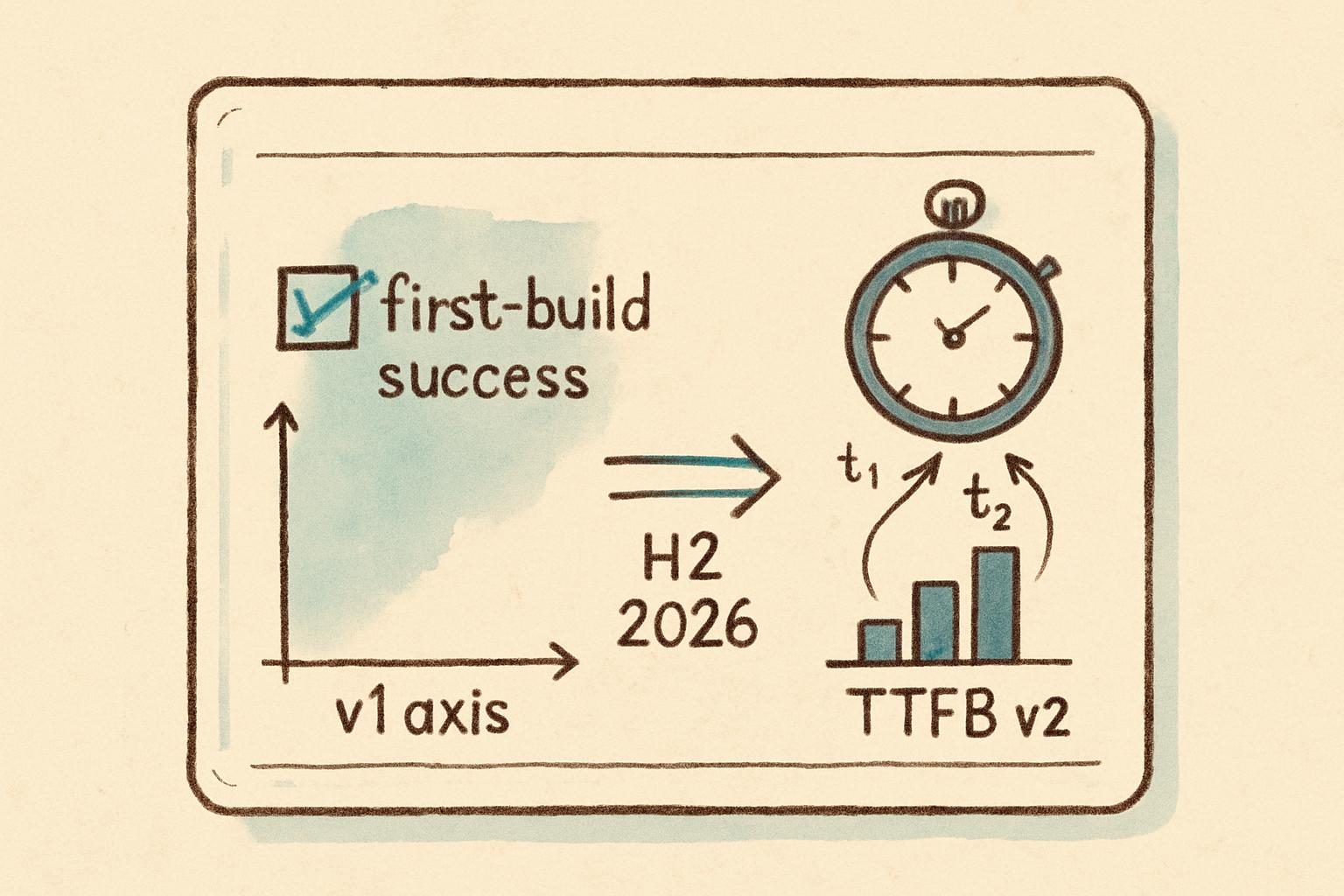
Sunsetting binary 'first-build success' from BuilderProof's H2 2026 rankings (and what replaces it)
Effective with the H2 2026 ranking, BuilderProof retires binary 'first-build success' as a scored axis, on the basis of documented vendor changes through H1 2026 rather than any first-party run. It becomes a precondition (must pass to be ranked) and the rank weight moves to time-to-first-functional-build.